
By Alex Mays, Charles Williams

Problem Statement
The issue that we selected is climate change. We chose this topic because we are both very passionate about climate issues and want to find solutions and help in any way possible. This topic is incredibly important to explore because it can help save our environment and positively impact the world.
Our environmentally conscious users need a way to build eco-friendly habits in an entertaining, motivating, and rewarding way that encourages them to help the environment and feel good about themselves.
About Planet Protectors
Charles and I were tasked with creating a platform that could be used to help the environment. We collaborated on this mobile application called Planet Protectors.
Planet Protectors is an app that helps users track their impact on the environment, set positive goals to improve their impact and get rewarded for achieving these goals. The goal of Planet Protectors is to help users create new eco-friendly habits to reduce their carbon footprints long-term in a way that is entertaining, motivating, and encouraging.
Roles:
Alex – UX / UI Designer
Charles – UX / UI Designer
Tools Used:
– Figma (for design and prototypes)
– Miro (for user flows and sitemap)
– Canva (for user personas and affinity map)
Research
Key Takeaways
During our research, we began by brainstorming potential problems and potential solutions. We then conducted two competitive analyses on apps that are similar to Planet Protectors. We chose EcoHero, and FoodHero from the app store because they were highly rated apps and had great designs. We then conducted a SWOT analysis which looks at strengths, weaknesses, opportunities, and threats. This initial research helped with some design inspiration.
Next, we conducted user research to understand what people are looking for in an app like Planet Protectors and understand people’s relationship with the environment and eco-friendly habits. This was to get a feel of what features people are looking for, what they care about, what they like, etc. We created 10 interview questions and interviewed 12 people.
Based on this research from our interviews, we organized the information and came up with a list of app features and other notes as follows:
1. Suggest ways to improve plastic, habits, and more
2. Make things easy and convenient
3. Add nice visuals, a mascot, etc.
4. Provide facts or info on the environment, and how others are helping
5. Add a social experience
6. Add encouragement, achievements, rank
7. Show info, graphs, visuals, and maybe videos
8. Calculate carbon footprint based on habits or products
Mood Board
Next, we created a style guide to get an understanding of our aesthetic and what the UI of Planet Protectors was going to look like.

Style Guide
This was our final style guide. We divided it into our logo guidelines, UI elements, colors, iconography, typography, and imagery.


User Personas
These are two user personas that we came up with based on our research and interviews. We made these user personas to better understand the users that we’re designing for.

SWOT Analysis
We began brainstorming the setup of our app, and before we finalized the design, we created a SWOT analysis on our own concept. The purpose of this was to zoom out on our project and see anything that we could add or improve upon before going through creating the design.

Solutions
We designed Planet Protectors as a personalized eco-friendly habit-building app. After brainstorming, and organizing all of our research and ideas, we came up with the structure of our app.
We added the basic sign-up and log-in process along with an onboarding process for first-time users.
The primary function of Planet Protectors is our goal-setting/habit-building feature. Users can find activities that fit best with them and gain rewards points and rank up through doing these activities.
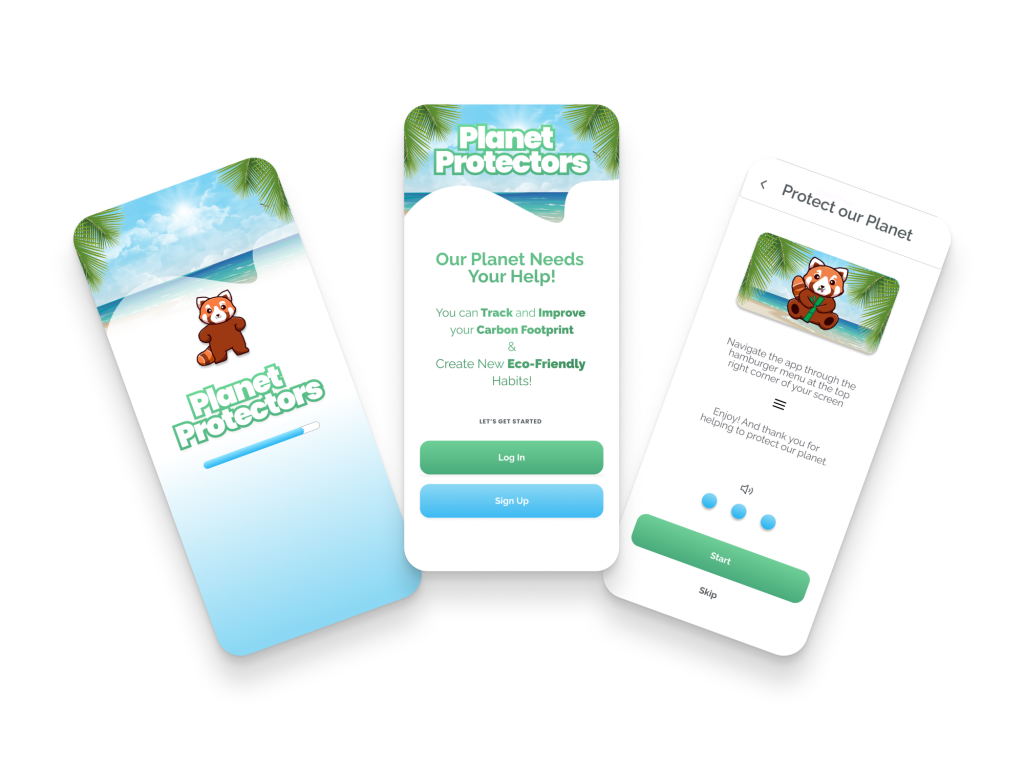
Getting Started
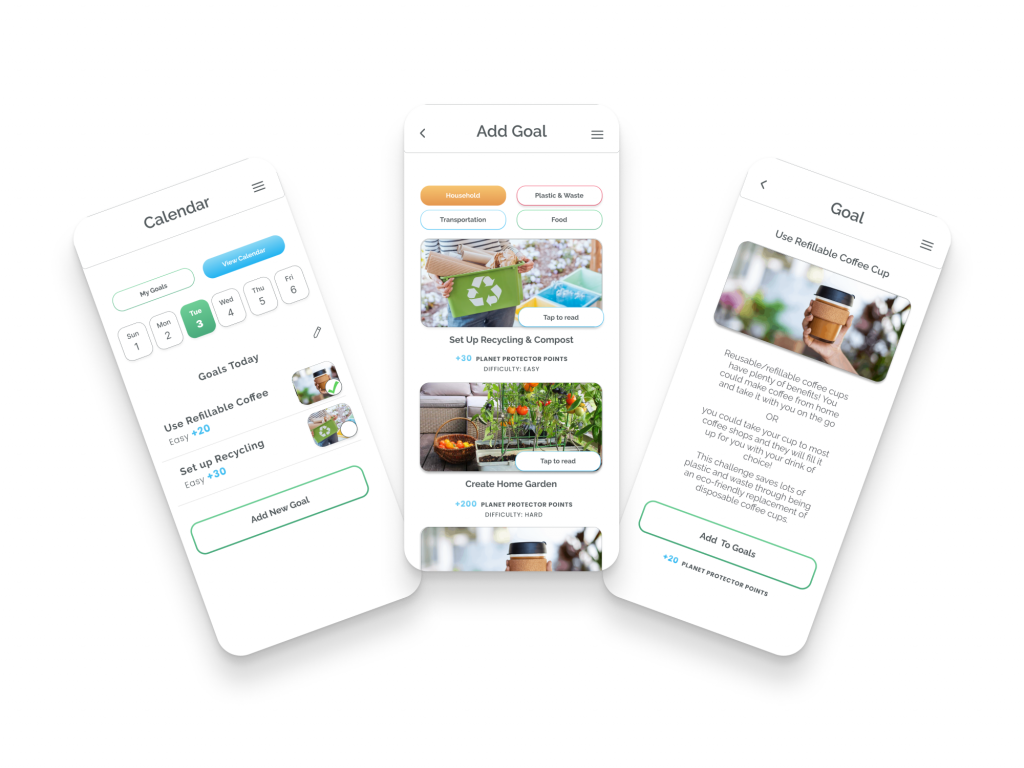
Goal Setting
To expand this feature and increase motivation, we created an environmental impact tracker, where users can see how much land and water they’ve saved, as well as seeing how much plastic and Co2 they’ve reduced through their eco-friendly activities.
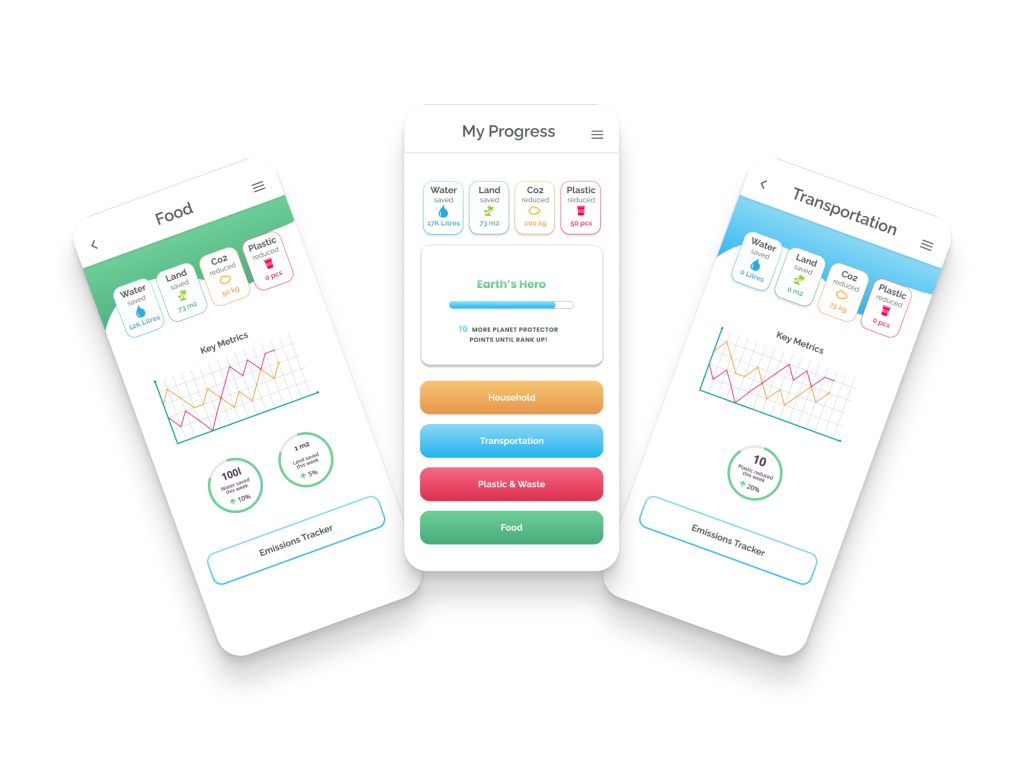
Tracking Progress

Socializing
In addition, we added a feature that works as a blog/article section that helps users learn about ways to improve and see what companies are doing to make a positive impact on the environment.
Finally, we added several social aspects to the app with users being able to add friends, make posts, chat, and interact with others to make the app more fun and encouraging.
Sitemap

User Flows

Prototypes
Low Fidelity

Before creating our high-fidelity wireframes we did some usability testing on 7 different people on our low-fidelity prototype and made improvements based on the feedback that we received. Once we made our higher fidelity prototype, we conducted another usability test to make sure everything worked well and users were happy with the app. We made a few more improvements based on the feedback we got.
High Fidelity


Future Ideas
We think that this project can be further improved moving forward. If we were to go all the way with this app, we could add more customization, and details, and allow more tailoring to a person’s lifestyle. Planet Protectors could also be paired with smart home systems and with vehicles. This would allow the app to track the metrics of their home systems and vehicle emissions. This would allow the app to provide much more specific, in-depth information for our users regarding the environmental impact of their lifestyles.